顯示具有 France 標籤的文章。 顯示所有文章

2009年3月17日

Canal du Midi


Description
Vic Lock on the Canal du Midi.jpg
English: Vic Lock near Castanet on the Canal du Midi
English: Écluse de Vic près de Castanet-Tolosan sur le Canal du Midi.
Source
http://www.flickr.com/photos/lefilsde/2296241453/sizes/o/


Canal du Midi
The Canal du Midi is a 240 km (150 mi) long canal in Southern France (French: le Midi). The canal connects the Garonne River to the Étang de Thau on the Mediterranean and along with the Canal de Garonne forms the Canal des Deux Mers joining the Atlantic to the Mediterranean. The canal runs from the city of Toulouse down to the Mediterranean port of Sète—which was founded to serve as the eastern terminus of the canal.

From Wikipedia, the free encyclopedia


More details please look up this site: http://en.wikipedia.org/wiki/Canal_du_Midi

2009年3月6日

Royal Saltworks of Arc-et-Senans X France

image :http://www.leonardfrank.com/Worldheritage/ArcetSenans01.jpg

The Royal Saltworks of Arc-et-Senans, near Besançon, was built by Claude-Nicolas Ledoux. Its construction, begun in 1775 during the reign of Louis XVI, was the first major achievement of industrial architecture, reflecting the ideal of progress of the Enlightenment. This vast, semicircular complex was designed to permit a rational and hierarchical organization of work and was to have been followed by the building of an ideal city, a project that was never realized.

It was a factory for the production of salt by heat evaporation of salted water.The complex consists of 11 buildings, not only workshops but also workers home, and is laid out in a semicircle around the Directors House.It was part of a bigger, unrealised plan of a circle containing the factory as well as other buildings of the ideal city of Chaux.The factory was in production until 1895.
credits:Leonard Frank and UNESCO

2009年3月3日

France " goes on a pilgrimage the road " When middle ages, French and other European country's Christian, every year (or passes through France) from France, goes to Spain's San Diego - Dekongbositela city to go on a pilgrimage. Domestic altogether has the leg which in France 4 go on a pilgrimage they to converge finally in a spanning law, west the frontier mountain pass--The dragon fills Siwa Liesi the mountain pass. " Goes on a pilgrimage the road in France " cities along the way, constructs the scale different church, is responsible to receive and to look after the pilgrimage. This went on a pilgrimage the activity to promote along the way the local religion culture development and the exchange

2009年3月1日

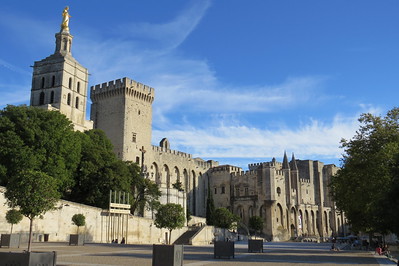
Historic Centre of Avignon X France

photo:http://www.worldheritagesite.org/picx/w228.jpg


Narration Text


Pope in Captivity/Historic Centre of Avignon: The Papal Palace, Episcopal Ensemble and the Avignon Bridge.
The city of Avignon is located on the banks of the River Rhone in southern France. The city was the heart of the Christian world around 700 years ago.
Pont Saint-Bénezet was made famous by the children’s song. Sadly most of the bridge has been lost due to flooding. During the Middle Ages, it was a major strategic point spanning the River Rhone.


The Cathedral of Notre-Dame des Doms stands on top of a small hill overlooking the town. The Pope’s throne is at the back of the Cathedral. The Pope, the head of the Catholic Church, was held in captivity here in Avignon in the 14th century. Pope Clement V was forced to move from Rome to Avignon on the order of the King of France.


The King wanted to strengthen French influence in Europe by using the power of the church. The incident is known as the “Avignon Captivity”. The large building next to the cathedral is the Papal palace. 50-metre high walls surrounded the palace to protect the Pope. The palace became known as “The most protected residence in the world”. A chapel, the Cardinal’s residence, Knights barracks, a courthouse and tax office were all placed inside this vast 15,000 square-metre castle. This is the Papal Bedroom.


Nature-inspired motifs decorate the walls and floors. There is a fresco painting with hunting scenes on the walls of the Deer Room. Many artists moved here with the Pope. Avignon became a prosperous town and its population grew five-fold to 30,000. However, the Pope - after a time - hoped he would return to Rome and be freed from French control. Pope Gregory XI finally managed to return to the Vatican some 70 years later. Avignon - following the departure of the Pope - once again returned to being a quiet suburban town in southern France.

creidts: http://whc.unesco.org/

2009年2月28日

Palace of Fontainebleau X France

image :http://www.parisprovence.com.au/pages/topdestinations/pages/fontainebleau.jpg


Palace of Fontainebleau, royal palace situated southeast of Paris, close to the valley of the Seine River, and a favorite resort of French monarchs from the 16th through the 19th centuries. Its ornate interiors are today a major tourist attraction.

The palace has its origins in a castle built by Louis VI in the 12th century. The pious Louis IX (Saint Louis) founded a monastery there in the 13th century, parts of which still survive. It was Francis I, however, who extended and enriched the buildings, making Fontainebleau a favored royal residence after 1528. It was in this period that a style of French painting and architecture, called the School of Fontainebleau, developed.


Francis I commissioned a number of important Italian and French artists to decorate his new palace. Their lavish decorations introduced the influence of the Italian style of painting known as Mannerism and of Italian Renaissance architecture (see Architecture: Italian Renaissance Architecture), which, at Fontainebleau were softened and refined into distinctly French versions of these styles.

Significant additions to the palace were made by subsequent kings, including Henry IV, another great collector, who doubled the size of the complex and improved the gardens. A great double staircase was added in the early 1600s under Louis XIII. Louis XIV, though preoccupied with the building of Versailles, employed French architect André Le Nôtre to remodel the gardens of Fontainebleau. Less admirably, he demolished part of the original 16th-century palace.

Fontainebleau was ransacked during the French Revolution (1789-1799) but was subsequently restored by the Emperor Napoleon I, who favored it above Versailles. (The former King's Bedroom was converted into a Throne Room for him.) Pope Pius VII was imprisoned by Napoleon in the palace for two years and it was at Fontainebleau the Emperor Napoleon gave up his throne in 1814. The palace was again revived as a royal residence in the mid-1800s by King Louis Philippe, who restored the 16th-century interiors and added his own distinctive touch to the building. Napoleon III and the Empress Eugènie, who reigned from 1852 to 1870, also visited Fontainebleau frequently. After the collapse of the empire in 1871, the palace became a state monument and is now among the most visited sites in France.


2009年2月26日

Versailles Palace XFrance


PALACE OF VERSAILLES


The Palace of Versailles was the official residence of the Kings of France from 1682 until 1790. It was originally a hunting lodge, built in 1624, by Louis XIII. It was expanded by Louis XIV beginning in 1669. He used it as a little lodge as a secret refuge for his amorous trysts with the lovely Louise de la Valliere and built a fairy tale park around it.


Jules Hardouin Mansart, the king's principal architect, drew the plans to enlarge what was turning more and more into a palace from A Thousand and One Nights. The terrace that overlooked the gardens was removed to make way for the magnificent Hall of Mirrors, the Galarie de Glaces. It is here from which the king radiated his power and where the destiny of Europe was decided over a century. The French classical architecture was complemented by extensive gardens.
The palace was stripped of most of it's furnishings during the French Revolution, and Tuileries in Paris became the royal residence. Versailles is now a national museum.
for more detailed information or updated events : http://www.chateauversailles.fr/en/

凡爾賽宮x 法國


凡尔赛宫(Versailles Palace)


位于法国巴黎西南郊伊夫林省省会凡尔赛镇,作为法兰西宫廷长达107年(1682-1789)。
简介  位于巴黎西南18公里的凡尔赛,是欧洲最宏大、最豪华的皇宫。是人类艺术宝库中的一颗绚丽灿烂的明珠
凡尔赛宫原是一个小村落,是路易十三1624年在凡尔赛树林中造的狩猎宫。1661年法国国王路易十四开始建宫,后又经历代王朝的修葺和改建,该宫于1689年全部竣工,历时28年落成。


至今已有300多年历史。全宫占地111万平方米。建筑面积11公顷,以东西为,南北对称,包括正宫和两侧的南宫和北宫,内部500多个大小厅室无不金碧辉煌,大理石镶砌,玉阶巨柱,以雕刻、挂毯和巨幅油画装饰,陈设稀世珍宝, 100公顷的园林也别具一格,花草排成大幅图案,树木修剪成几何形,众多的喷水池喷泉雕像点缀其间。凡尔赛宫及其园林堪称法国古建筑的杰出代表,1833年被辟为国家历史博物馆,1980年被列入(世界文化和自然遗产名录),如今,这里是法国领导人会见外国元首和使节的地方。

====================================
建筑特色  凡尔赛宫宫殿为古典主义风格建筑,立

凡尔赛宫外立面面为标准的古典主义三段式处理,即将立面划分为纵、横三段,建筑左右对称,造型轮廓整齐、庄重雄伟,被称为是理性美的代表。其内部装潢则以巴洛克风格为主,少数厅堂为洛可可风格。
  正宫前面是一座风格独特的 “ 法兰西式 ” 的大花园,园内树木花草别具匠心,使人看后顿觉美不胜收。而建筑群周边园林亦是世界著名。它与中国古典和皇家园林有着截然不同的风格。它完全是人工雕琢的,极其讲究对称和几何图形化。

  如果凡尔赛宫的外观给人以宏伟壮观的感觉,那么它的内部陈设及装潢就更富于艺术魅力,室内装饰极其豪华富丽是凡尔赛宫的一大特色。 500 余间大殿小厅处处金碧辉煌,豪华非凡:内壁装饰以雕刻、巨幅油画及挂毯为主,配有17、18世纪造型超绝、工艺精湛的家具。

大理石院和镜厅是其中最为突出的两处,除了上面讲到的室内装饰外,太阳也是常用的题目,因为太阳是路易十四的象征。有时候还和兵器、盔甲一起出现在墙面上。除了用人像装饰室内外,还用狮子、鹰、麒麟等动物形象来装饰室内。

有的还用金属铸造成楼梯栏杆,有些金属配件还镀了金,配上各种色彩有大理石,显得十分灿烂。天花板除了象镜厅那样的半圆拱外,还有平的,也有半球形穹顶,顶上除了绘画也有浮雕。宫内随处陈放着来自世界各地的珍贵艺术品,其中有我国古代的精品瓷器。

  但凡尔赛宫过分追求宏大奢华使得居住功能极不方便。宫中没有一处厕所或盥洗设备,连王太子都不得不在卧室的壁炉内便溺;路易十五亦极端厌恶寝宫,认为它虽然宽敞豪华,却不保暖。这是凡尔赛宫的弊端所在。

credits: baidu zhidao

如要更詳細內容請看
http://baike.baidu.com/view/27820.html?wtp=tt

2009年2月23日

Notre Dame de Paris


Notre Dame de Paris ('Our Lady of Paris' in French) is a Gothic cathedral on the eastern half of the Île de la Cité in Paris, France, with its main entrance to the west.

It is the cathedral of Paris and the seat of the Archbishop of Paris. Notre Dame de Paris is widely considered one of the finest examples of French Gothic architecture. It was restored and saved from destruction by Viollet-le-Duc, one of France's most famous architects. The name Notre Dame means "Our Lady" in French. Notre Dame de Paris was one of the first Gothic cathedrals, and its construction spanned the Gothic period. Its sculptures and stained glass show the heavy influence of naturalism, unlike that of earlier Romanesque architecture.

Notre Dame de Paris was among the first buildings in the world to use the flying buttress [arched exterior supports]. The building was not originally designed to include the flying buttresses around the choir and nave. After the construction began and the thinner walls (popularized in the Gothic style) grew ever higher, stress fractures began to occur as the walls pushed outward. In response, the cathedral's architects built supports around the outside walls, and later additions continued as such.

The cathedral suffered desecration during the radical phase of the French Revolution in the 1790s, when much of its religious imagery was damaged or destroyed. During the 19th century, an extensive restoration project was completed, returning the cathedral to its previous state.

credits on wikipedia..
more information about the history or construction of the Notre Dame de Paris
please check it out on http://en.wikipedia.org/wiki/Notre-Dame_de_Paris

2009年2月21日

簡介x 法國

先來很簡單慨要的介紹法國

==============================


法國是最大的國家在西欧。 它由地中海和大西洋毗鄰。

-首都巴黎
-大都市巴黎(2,175,200)
-語言法語
-貨幣歐元
-人口60,180,529 (7月2003 est。)
-宗教天主教90%,基督教教會成員2%,猶太1%,穆斯林(北部非洲工作者) 3%,無聯繫4%
-區域超过210,000平方英里在地中海包括可西嘉島的海島
-高山Mont Blanc,在阿爾卑斯。 它是高山在歐洲。
-最長的河河盧瓦爾河
-自然资源: 煤炭,铁矿,鋁土礦,魚,木材,鋅,鉀鹽


法國經常被描述作为有六邊的一個國家。 三是海岸。 其他是與邻国的邊界。


天氣
法國通常有涼快的冬天和溫和的夏天。 然而,沿地中海他們有熱的夏天。
北部有涼快的天氣。 在南部它得到非常熱在夏天。 果子例如桔子和檸檬在南部增长。


有在法國的部分的山。 有些山積雪覆蓋終年。 法國的高山是法國阿爾卑斯和朱拉山,毗鄰的意大利和瑞士和Pyrénées,沿與西班牙的邊境。
高山是Mont Blanc在法國阿爾卑斯。 它上升到4,807m (15,771 ft)。 登上Blanc也是在整體的高山歐洲。


法國乳酪
超过350种乳酪是法国制造。


什麼是法國著名為?
法國為乳酪(軟製乳酪、鹹味乾乳酪,羊乳乾酪)酒,香水是著名的(Chanel, Dior, Givenchy)和汽車(Renault、Citroen, Peugeot)。 它為環法自行車賽和遊覽埃菲爾也是著名的。
巴黎著名地標
標誌例如埃佛尔铁塔、天窗、Notre Dame大教堂,拉丁處所, Montmartre和喬治・篷皮杜中心在世界上做巴黎一被參觀的地方


食物
法國為它美好的食物被认识。 法國烹調在世界上认为是最好。 廚師準備盤例如乳蛋餅、soufflés、奶油甜點、pâté、新月形麵包、crêpes和法国面包。 許多人民在法國喜歡喝他們的從碗的热巧克力和蘸他們的麵包入它。

IntroructionXFrance

A little concise introdcution on France
-------------------------------------------------------
France is the largest country in western Europe. It is bordered by both the Mediterranean Sea and the Atlantic Ocean.

-Capital :Paris
-Largest City :Paris (2,175,200)
-Language: French
-Currency: Euro
-Population 60,180,529 (July 2003 est.)
-Religions Roman Catholic 90%, Protestant 2%, Jewish 1%, Muslim (North African workers) 3%, unaffiliated 4%
-Area more than 210,000 square miles includes the island of Corsica in the Mediterranean Sea
Highest Mountain Mont Blanc, in the Alps. It is the highest mountain in Europe.
-Longest River River Loire
-resources: coal, iron ore, bauxite, fish, timber, zinc, potash


Mountains
There are mountains in parts of France. Some mountains are snow-cappedall year round. France's highest mountains are the French Alps and Jura Mountains, bordering Italy and Switzerland, and the Pyrénées, along the frontier with Spain.
The highest mountain is Mont Blanc in the French Alps. It rises to 4,807m (15,771 ft). Mount Blanc is also the highest peak in the whole of Europe.


What is France Famous for?

France is famous for cheese (Camembert, Brie, Roquefort) More than 350 kinds of cheese are made in France.
wine, perfume(Chanel, Dior, Givenchy) and cars (Renault, Citroen, Peugeot). It is also famous for the Tour de France and the Tour Eiffel.

Famous Landmarks of Paris
Symbols such as the Eiffel Tower, the Louvre, the Cathedral of Notre Dame, the Latin Quarter, Montmartre, and the Georges Pompidou Center make Paris one of the most visited places in the world.

Weather
France generally has cool winters and mild summers. However, along the Mediterranean they have hot summers.
The north has cool weather. In the south it gets very hot in summer. Fruits such as oranges and lemons grow in the south.

Food
France is known for its fine food. French cooking is thought to be the best in the world. Chefs prepare dishes such as quiche, soufflés, mousse, pâté, croissants, crêpes, and French bread. Many people in France like to drink their hot chocolate from bowls and dip their bread into it.

credit by http://www.woodlands-junior.kent.sch.uk/

2009年2月20日

Carcassonne牆壁 X 法國

早军事架构, Carcassonne的一個非凡例子是故事書中世紀鎮的圖像。 它由在歐洲(幾乎2英里),塔樓的童話混合,城樓、開始的城垛和吊橋的最長的牆壁圍攏在第6個世紀。 在包圍這個興旺的築堡壘於的城市,最大的雙重壘在歐洲,完成了之前,將由羅曼、Gauls、Visigoths、阿拉伯人、直率和法國皇族需要十三個世紀改變、加法和點綴。 lices,同心內在和外面設防、提議视图在被保存的城堡之內並且豪華的綠色鄉下和河Aude之间的一個道路無。 它的夜間照明提供高等戏剧,雖然不再使用火炬。 La Cité是鎮的更旧的部分,坐幾個世紀是在當前法國和西班牙之間的邊界的1,500英尺小山。 12世紀Cathédrale St. - Nazaire有最有趣的建築學在La Cité。 如果您尋找一個精妙的斑點檢查您的袋子,在Hotell de在一個前主教宮殿的站點的la Cite?的嘗試隔壁。 修造入古老壘和合併五十二座城樓之一,最近被更新的常春藤覆蓋的旅館是一个最美好在區域并且吹嘘一家典雅的餐館, La Barbacane。

The Walls of Carcassonne X France

Image brought to you courtesy of GalleryPlayer's Image Collection.


An extraordinary example of early military architecture, Carcassonne is the very image of a storybook medieval town. It is surrounded by the longest walls in Europe (nearly 2 miles), a fairy-tale concoction of turrets, watchtowers, battlements, and drawbridges begun in the 6th century. It would take thirteen centuries of alterations, additions, and embellishments by the Romans, Gauls, Visigoths, Arabs, Franks, and French royalty before the double ramparts encircling this prosperous fortified city, the largest in Europe, were completed.


The lices, a path between the concentric inner and outer fortifications, offers views within the preserved citadel as well as the lush green countryside and the River Aude without. Its nighttime illumination provides high drama, though torchlight is no longer used.


La Cité is the older part of town, sitting on a 1,500-foot hill that for centuries was the border between the present France and Spain. The 12th-century Cathédrale St.-Nazaire has the most interesting architecture in La Cité. If you're looking for an exquisite spot to check your bags, try next door at the Hôtel de la Cité, on the site of a former Episcopal palace.


Built into the ancient ramparts and incorporating one of the fifty-two watchtowers, the newly renovated ivy-covered hotel is one of the finest in the area and boasts an elegant restaurant, La Barbacane.

2009年2月18日

巴黎x 法國

巴黎
法國
巴黎養育感覺并且哺養智力和靈魂。 遊人聚集到它壯觀的博物館和展覽,但是這個富有文化的城市生活围绕它的鄰里cafés和小餐館,訪客能偶爾地成功表面上不可能的技藝通過Parisians的。 Est鈰que c'est可能? 在光城市,浪漫史出生地和樣式,一切是不可思議的,并且任何可能發生。
名列前茅十視域
在世界(大约163英尺高和147的弧DE TRIOMPHE-The最大的凯旋门寬)在1806年由拿破崙架設紀念他的軍隊的勝利。 多年來它成為了重点国葬的和在WW II期間,侵略的德國人和在它之下通過的巴黎遊行的解放。 它是法國的无名英雄墓站點,并且它有一間观察台和展览室在上面,当描述的照片和平板印刷曲拱的歷史。 那里: place查爾斯・ de Gaulle-Etoilee,第8 arrondissement。 通过地下段落輸入。 www.monuments.fr。
BASILIQUE作為一奉獻提供的DU SACRÉ COEUR計劃的採取法國的頭腦它的損失在1870年, Sacré-Coeur佛朗哥普魯士人的戰爭中被修造了在1876年和1914年之間在華麗羅馬拜佔庭式的樣式,在設計以後由保羅・ Abadie。

Paris X France

Image brought to you courtesy of GalleryPlayer's Image Collection.
Paris
France
Paris nourishes the senses and feeds both intellect and soul. Tourists flock to its magnificent museums and exhibits, but the life of this culture-rich city revolves around its neighborhood cafés and bistros, where visitors can occasionally pull off the seemingly impossible feat of passing for Parisians. Est-ce que c’est possible? In the City of Light, the birthplace of romance and style, everything is magic, and anything can happen.

THE TOP TEN SIGHTS
ARC DE TRIOMPHE—The largest triumphal arch in the world (about 163 feet high and 147 wide) was erected by Napoleon in 1806 to commemorate his army’s victories. Over the years it became the focal point for state funerals, and during WW II, both the invading Germans and the liberation of Paris parade passed beneath it.
It’s the site of France’s Tomb of the Unknown Soldier, and it has an observation deck and exhibition hall at the top, with photos and lithographs depicting the arch’s history.

WHERE: Place Charles de Gaulle-Étoile, 8th arrondissement. Enter via the underground passage. www.monuments.fr.
BASILIQUE DU SACRÉ-COEUR—Planned as a votive offering to take France’s mind off its loss in the Franco-Prussian War of 1870, Sacré-Coeur was built between 1876 and 1914 in an ornate Romano-Byzantine style, after a design by Paul Abadie.

credit by http://www.1000beforeyoudie.com/

2009年2月17日

Les Calanches X France

Beforehand I just intrdouce two countries

Austria (Salzburg)and Eygpt which are included in the places you to see before die

and later on will introduce top world architecture ( which of course the previous arcticle Eygpt, with sphinx , pyramaids won' t be introduced.)


this time i will introduce France but will first introduce
the places you need to see with precise introduction then will have depth history on the sceneries and the place

========================================


Image brought to you courtesy of GalleryPlayer's Image Collection.


Except for its eastern coast's 200-mile stretch of white and gold sand beaches, Corsica resembles a mountain in the middle of the sea.

The Greeks called it Kallisté, “the most beautiful.” Les Calanches takes its name from the weathered granite pinnacles and phantasmagorical outcroppings whose colors shift from every shade of orange and pink to vermilion according to the day's light. With precipitous drops of up to 3,000 feet to the sparkling indigo sea below, their eroded formations were described by Guy de Maupassant as “a nightmarish menagerie petrified by the will of an extravagant god.”

Except for late July and August, when the island is inundated with European visitors, the roads remain blissfully uncrowded. Whether you take the narrow road that weaves through the Calanches archways or one that meanders deep into the empty, craggy interior, Corsica is a place of astonishing natural beauty. Its charm is evocative of the old Mediterranean, not French or even European in character.

Hotels are small, individualistic, and rustic, except for the luxurious beachside Le Maquis, named for the thick underbrush of thyme, lavender, and sage that clothes the untamed interior like an aromatic mantle—giving Corsica its nickname, “the perfumed isle.”

credit by http://www.1000beforeyoudie.com